Showing posts with label Hancock. Show all posts

Tuesday, February 9, 2016

Brief History of Greenfield

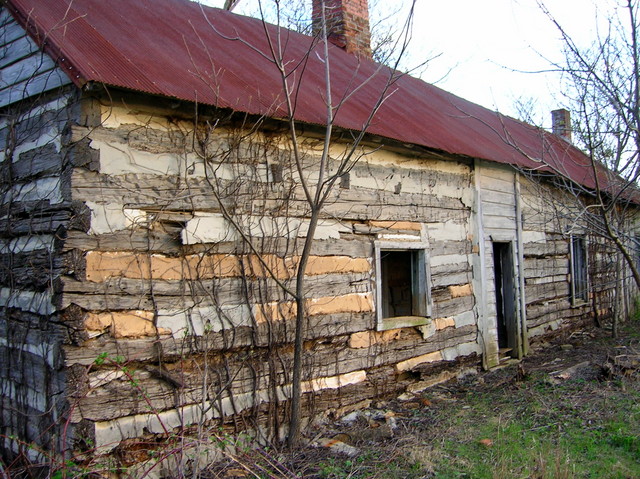
Historic structure at Greenfield, 2006

Historic Structure at Greenfield, 2006
 
BRIEF HISTORY OF GREENFIELD (And the Lewis and Clark Connection)
 
The Preston Family home in Botetourt County, VA, (now (2016) called The Botetourt Center at Greenfield), is an example of one of Botetourt's long-ago plantations. Originally named Greenfield by Colonel William Preston, the remaining 900-acre property is now a multi-use area consisting of industrial sites, an elementary school, and recreational facilities.
 
William Preston, Sr., (1729-1783), the original founder of Greenfield, played a crucial role in surveying and developing the colonies going westward. Preston exerted great influence in the colonial affairs of his time, ran two large plantations (Greenfield in Botetourt and Smithfield in Montgomery County), and founded a dynasty whose progeny would supply leaders for the South for nearly a century. He served in the Virginia House of Burgesses and was a Colonel in the militia during the American Revolutionary War. He was one of the thirteen signers of the Fincastle Resolutions, a predecessor to the United States Declaration of Independence. He also was a founding trustee of Liberty Hall (later Washington and Lee University), when it was made into a college in 1776.
 
His son, William Preston, Jr. (Billy) was born in 1770, one of six children born at Greenfield. Billy joined the Botetourt County militia at age 18. From 1791 – 1796 he served in various positions, including captain in the United States Army. By 1796, he had been assigned to the 4th. U.S. Regiment of Infantry where he met and served with Meriwether Lewis & William Clark. They became best friends, and this friendship brought Lewis and Clark to Botetourt County.
 
The following is a chronology of some of the documented relationships and public events the explorers experienced in Botetourt:
 
1798 - Billy Preston resigns his Army Commission, returns to Botetourt where he served as a Major in the local Virginia Militia.
    
March, 1802- Billy Preston marries Caroline Hancock of Fincastle. December 1806 –William Clark returned to Botetourt County after the Expedition.
 
January 8, 1807 – Citizens give Clark a “Welcome Home” Address & Clark Responds
 
November 1807 – Meriwether Lewis visits Fincastle for a hoped for social encounter with Letitia Breckinridge. Unfortunately, Letitia looked elsewhere and six months later married a man from Richmond.
 
January 5, 1808 – William Clark & Judith Hancock were married in Fincastle. Billy Preston assisted in obtaining the marriage certificate by pledging the required $ 150.00 marriage bond. William Clark and Billy Preston have now become brothers-in-laws.
 
Summer 1808 – Billy Preston wrote a letter to Meriwether Lewis informing him of the marriage of Letitia Breckinridge. Meriwether responded, expressing his heartfelt hurt over the rejection.
 
There can be no doubt about the strong connection between the Preston Family at Greenfield, and in particular, the relationship between Billy Preston and Meriwether Lewis & William Clark. In William Clark’s detailed description of his 1809 journey eastward from St. Louis, his “Memorandum Book, 1809” provides these travel accounts: “November 12, Col John Preston breakfast, $ 4.25, Abbington; November 19, At Major Prestons.” (Billy and Caroline Hancock Preston's home).
     
Other descendants of William Preston, Sr. also played a large role in the establishment of early America. Prestons' son James Patton Preston was governor of Virginia from 1816–1819 and he helped charter the University of Virginia. Grandson William Ballard Preston was a Congressman, Secretary of the Navy under Zachary Taylor, and later a Senator from the Confederate States of America. William Ballard Preston also offered the Ordinance of Secession to the Virginia Legislature that resulted in Virginia joining the Confederacy, and he co-founded a small Methodist college, the Preston and Olin Institute, which became what is today Virginia Tech.
 
The legacy of leadership and patriotism left by William Preston is very long and storied and makes him a true American hero.
 
The original manor home of Greenfield burned in 1959. Botetourt County purchased the land in 1995.
 
Sources: The Fincastle Herald, February 2016 (answers to FAQs by Friends of Greenfield Preston Plantation)
Wikipedia

Thursday, November 8, 2012

On Saturday, November 3, 2012, in the Botetourt County seat of Fincastle, VA, there was a big to-do that was over 200 years in the making.

The county and the federal government installed at the Botetourt County Courthouse a special NOAA (National Oceanic and Atmospheric Administration) disk commemorating the Lewis and Clark expedition. It is the second such disk in the state: the first is at Monticello.

Why install this in Fincastle? A very good question. Some believe that the Lewis and Clark expedition actually started in Fincastle, not St. Louis. However, the real reason belongs to the ladies: William Clark's wife, Julia aka Judith Hancock, was a Fincastle gal. He knew he before he and Meriwether Lewis set out on their historic trek across the fledgling nation, and named the Judith River in Montana after her. Clark's second wife also came from this area (but nothing was named after her as she came after the expedition).

The Lewis and Clark expedition, for those who may not know, was commissioned by Thomas Jefferson. It was the first transcontinental venture and the men kept detailed journals of plants, wildlife, and people they met along the way. The journals are still studied today by enthusiasts of history. But knowledge was not the goal: economic and commercial growth was. They were seeking the most viable route to the Pacific.

Here are photos from the hour-long event, which was full of pomp and dignity as befits a ceremony of this import.

The Botetourt County Courthouse before the festivities begin.
VMI Cadets played bagpipes and bugle.
Folks stood around and chatted prior to the ceremonies. The man in the foreground is a county supervisor.
 The pastor and the judge take a look at paperwork prepared for the day.
The box hiding the NOAA disk.
Boy Scouts and Girl Scouts took part in the ceremony.
The historic sign noting when the county courthouse burned in 1970. My husband's father helped put out the fire.
County supervisor and a Roanoke news reporter.
Heads bowed as the color guard enters the area.
The judge says a few words.
The Scouts lift the box for the big reveal.
The special NOAA disk. It has important geological information embedded in it.
Folks standing around looking at the disk as the ceremonies end.
It was a beautiful day and there were about 200 people there. Visitors to the Botetourt County Courthouse should be sure to check out the disk.


Sunday, June 8, 2008

Colonel George Hancock

George Hancock’s first appearance in Botetourt is in 1781 when he married Margaret Strother of Fincastle. He appeared again in 1782 when he obtained a license to practice law in the county.

In 1785, Hancock was appointed a colonel in the county militia; he also served as Botetourt County’s Commonwealth Attorney. He was the first citizen of Botetourt County to serve in the Congress of the United States. He later moved from Fincastle to Fotheringay in Montgomery County, where he died in 1820.

Hancock’s daughter Julia, known also as Judith, was born to Hancock and his wife Margaret on November 21, 1791, in Fincastle.

She wed William Clark, the famous explorer, in January 1808. Clark reportedly named the Judith River in Montana after the young girl he left in Fincastle while he sought a route to the Pacific.

Saturday, June 7, 2008

Santillane


Santillane is the grand ol’ dame of Fincastle.
The pre-civil war estate was once home to Judith Hancock Clark, wife of William Clark of the Lewis and Clark expedition.

As of 2008, the home had been restored and turned into a bed and breakfast.

The home is structurally very sound. During renovations, much of the decorative trim turned out to be plaster instead of painted wood as originally thought.

The house has 14 rooms, counting foyers and bathrooms. All have been restored.

The house boasts extremely high ceilings, a staircase that looks like something out of Gone with the Wind, a pewter chandelier with a date of 1726 etched into it, hardwood floors, original wallpaper in the living room, original glass in the windows, and elegant touches around the ceilings.

Legend holds the original Santillane burned and was rebuilt. However, signatures on the plaster, which has held up remarkably well, date back to the very early 1800s.

Santillane is on the National Register of Historic Places.

A marker on US 220 calls it “one of Botetourt County’s most distinguished properties. The Greek Revival house sits on a tract of land originally owned by Colonel George Hancock, a member of the United States Congress from 1793-1797. In 1808 Hancock's daughter, Judith, married General William Clark. Clark served from 1803 to 1806 as a leader of Thomas Jefferson's famous Lewis and Clark expedition which was instrumental in opening the West for American settlement.”